Broward County
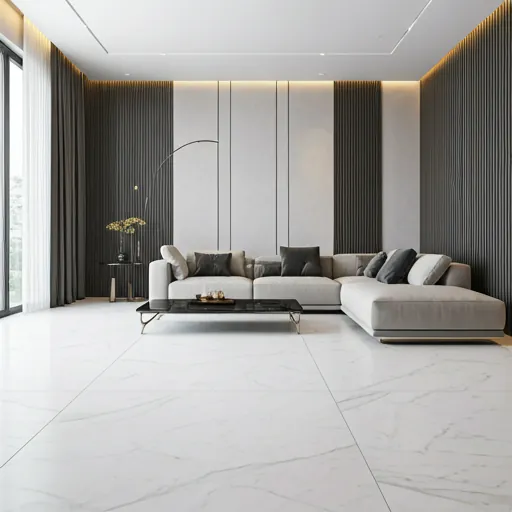
Marble in a Fort Lauderdale home dulls from etching, scratches, and years of humidity. Much of that damage sits in the top layer of the stone. Below is what causes it, how the polish works, and how to keep the surface bright afterward.
Marble is calcium carbonate, so acids are its enemy. Lemon juice, wine, vinegar, and citrus cleaners leave dull etch marks in the stone. An etch is a chemical reaction in the surface, so wiping it does not remove it.
Coastal air adds a second problem. Salt and humidity settle on the stone and into the grout lines. Entry floors take grit on the soles of shoes, and grit scratches marble. Sweep before you mop, and use a pH-neutral cleaner rather than a general spray.
Sealing does not stop etching. A sealer slows staining, but acid will still mark the surface. Use the sealer for stains and a pH-neutral cleaner for daily care, and keep vinegar and bleach off the stone.
Uneven pieces are a separate problem. When one slab sits higher than its neighbor, the step between them can be ground down. Ask whether the grinding will leave the joint flat before polishing begins.
Many single-story homes here sit on a concrete slab. Before the polish starts, check the floor for loose pieces and cracked grout, because a damaged joint lets water reach the slab.
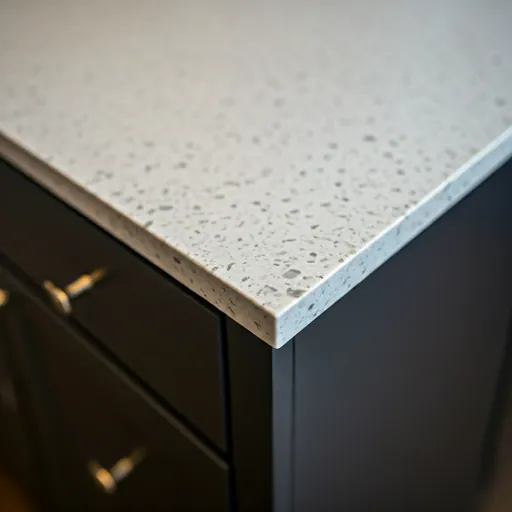
Diamond abrasives remove scratches and etch marks from the top layer. The honing stage uses a coarse grit to level the surface, then finer grits bring back the shine. Each stage removes the scratch pattern left by the one before, so skipping a grit leaves a hazy finish.
Floors and countertops need different methods. A floor is polished with a planetary machine across the whole room, with water and dust control. A countertop is polished by hand, one edge and one section at a time. Ask which method your surface needs before grinding starts.
Polishing is not the same as crystallization. Crystallization is a chemical film that wears off, while diamond polishing works on the stone itself. Ask which one a contractor is offering, and ask for the process in writing.
After polishing, the surface can take a penetrating sealer. Ask for care instructions written for that exact surface, and keep a note of the cleaner and sealer used.
Many homes here sit on canals or open water. Salt air from that water settles on polished stone and dulls it between cleanings. Broward is inside the High-Velocity Hurricane Zone, so exterior stone also faces storm wind.
Why Choose AP STONE INC.
Ask for diamond honing, not a coating, if you want the shine to last.
A penetrating sealer slows staining. It does not stop etching, so cleaning still matters.
The AP Stone team has worked with South Florida stone for more than 20 years.
Floor machines cover large areas, and hand polishers handle countertops and edges.
Many countertops and shower walls can be polished in place, without removal.
Bilingual team in English and Spanish.
01
The surface is checked in person, and the area is measured before any quote.
02
Decide between matte, satin, and high gloss while you can see a sample of your stone.
03
Ask how water will be contained and dust controlled before grinding starts.
04
Ask for written care instructions for your surface.
"Our 12-year-old marble floor in Coral Ridge looked dull and scratched. AP Stone polished it over three days and it came back better than the day it was installed. Worth every penny."
Carolina M.
Coral Ridge — Floor Restoration
"Master bath marble countertop with deep etching. Six hours of polishing and the etches are gone. The polish is mirror-perfect. They sealed it and gave us care instructions."
Patricia N.
Las Olas — Countertop Restoration
"Galt Mile condo with a marble feature wall that had water stains. AP Stone restored it from a lift in two days. The wall reflects like a mirror now."
David L.
Galt Mile — Feature Wall
The price depends on the surface, the depth of the etching or scratches, the total area, and whether the work is a floor, a countertop, or a wall. Deep damage needs more grinding than light dullness. We quote after measuring, so ask for a quote that lists each surface separately.
A floor takes longer than a countertop, and a wall takes longer than either. The steps run measuring, grinding, polishing, sealing, and cleanup. The sealer needs time to cure before the surface is used, so plan around that wait. Put the steps and the sealer wait in writing before work starts.
Yes. Salt air from the water settles on the stone and dulls it between cleanings, and humid air keeps the grout damp for longer. Sweep first, use a pH-neutral cleaner, and reseal on the schedule the sealer maker gives.
Either one. Honing gives a matte or satin look, and polishing gives a high gloss. Crystallization is a film that wears off, so ask for diamond polishing if you want a finish that lasts.
Contact us today for a free consultation and detailed estimate.